Updated November 9, 2026
Roof Covering Replacement Often Does Not Require a Permit
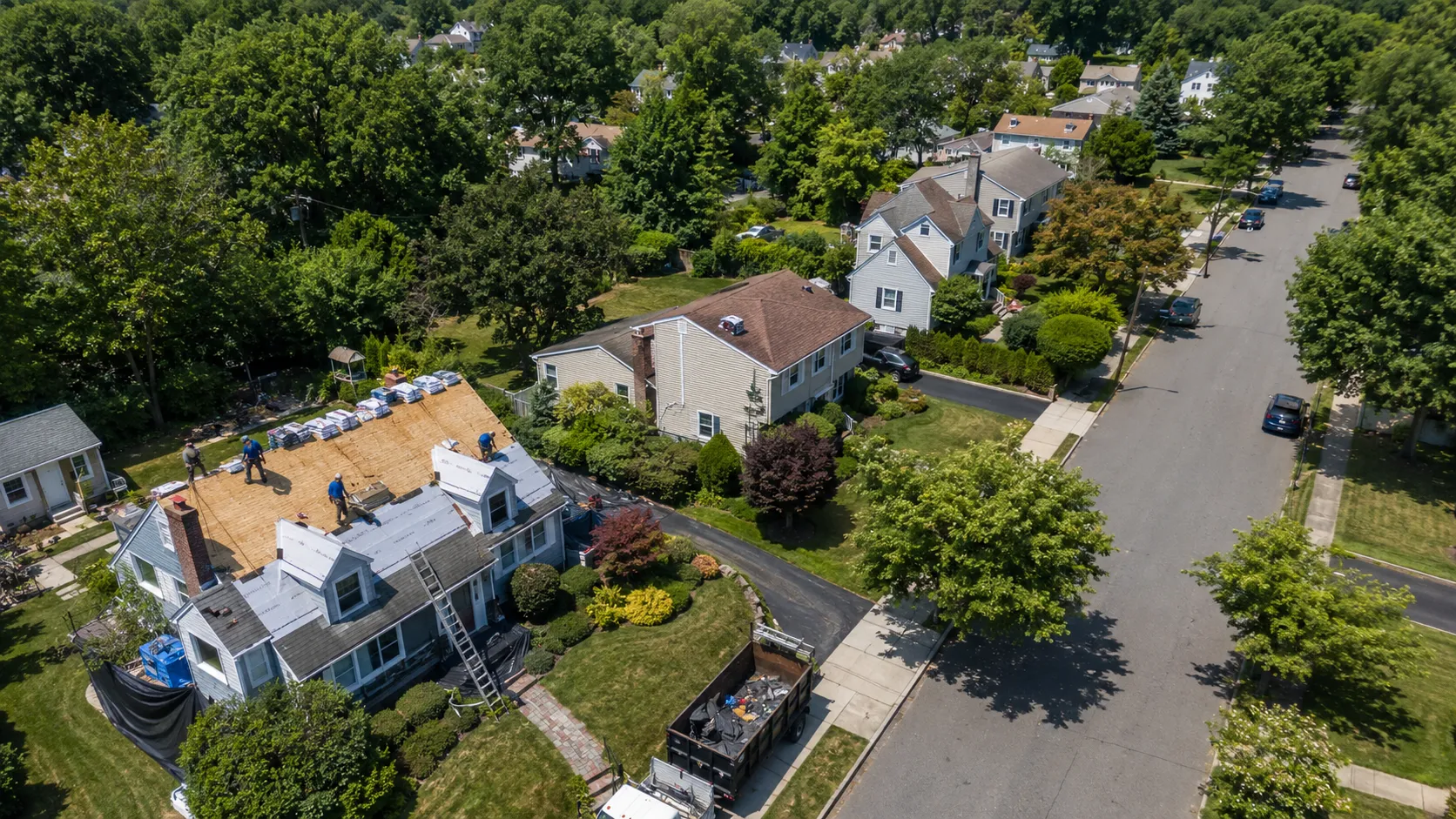
For an existing detached one- or two-family home in New Jersey, replacing the roof covering is generally treated as ordinary maintenance. New Jersey Department of Community Affairs guidance explains that removing the covering down to the existing sheathing, or adding a permitted second layer, does not itself require a construction permit for these homes. This does not mean that every roofing project is exempt.
The distinction is the actual work, not simply whether the estimate says “new roof.” Replacing damaged sheathing, making structural repairs, working on a townhouse or condominium, or disturbing electrical components can change the requirements. Confirm the scope with your municipal construction office before work begins.
Which Roofing Work Needs a Closer Permit Review?
| Project | What to confirm |
|---|---|
| Roof covering on a detached one- or two-family home | Generally ordinary maintenance when the work is limited to the covering and existing sheathing remains. |
| Replacing roof sheathing | DCA guidance says sheathing replacement requires a permit. |
| Townhouse or condominium reroofing | Do not apply the detached-home exemption. DCA guidance identifies these as requiring roof permits. |
| Structural roof repairs | Work affecting structural safety is outside ordinary maintenance. Discuss the repair details with the construction official. |
| Reroofing around existing solar panels | An electrical permit is required when removing the rails compromises grounding or bonding, according to DCA guidance. |
What If Rotten Decking Is Found During Tear-Off?
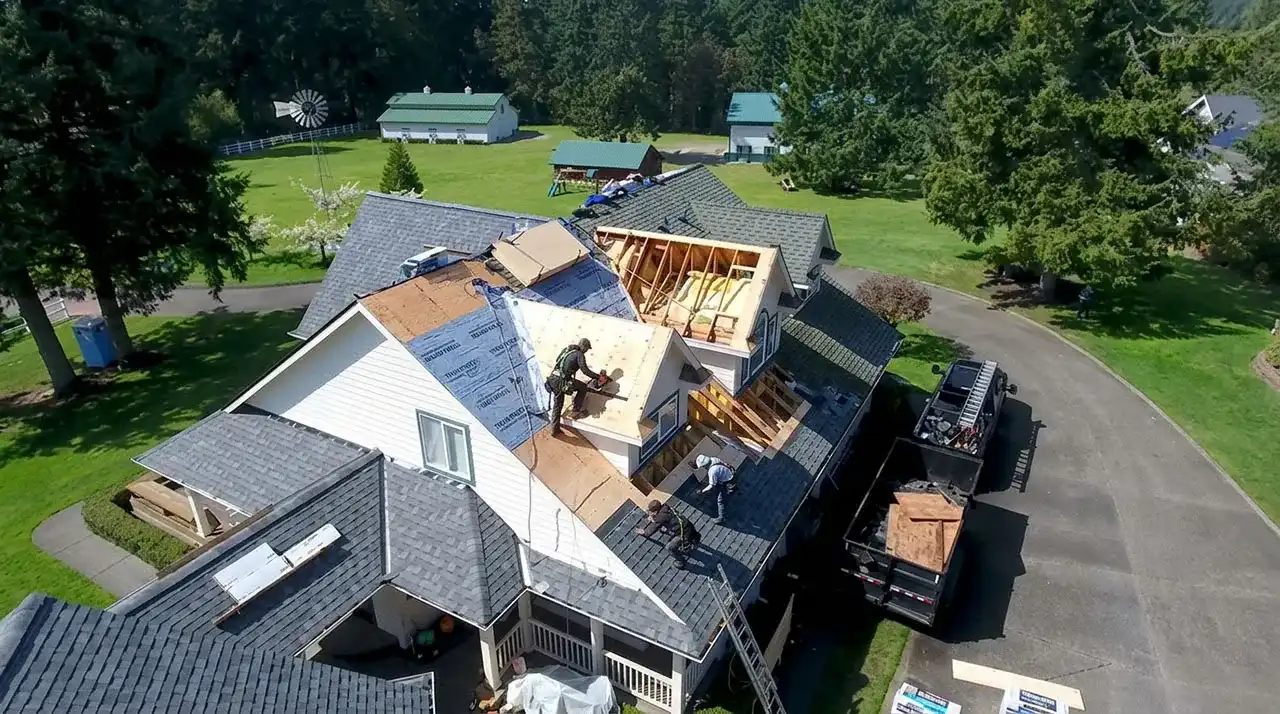
Ask how the proposal handles concealed damage before you approve the job. If opening the roof reveals deteriorated sheathing, the work may expand beyond a roof-covering replacement. Your contractor should explain the changed scope and coordinate the applicable permit and inspection requirements before that additional work proceeds.
Our roof inspection service helps identify visible concerns. A roof replacement assessment can then address materials, roof condition, access, and possible concealed damage.
Roofing Work With Existing Solar Panels
DCA’s Spring 2025 guidance clarifies that replacing the roof covering on a detached one- or two-family dwelling remains ordinary maintenance when rooftop solar is present. However, removing solar rails and compromising grounding or bonding triggers an electrical permit for proper reconnection. New or fully replaced solar systems involve additional requirements. Have the roofer and solar installer agree on who will handle removal, reinstallation, electrical work, and any required approvals.
Questions to Ask Before Signing a Roofing Proposal
- Is this only a covering replacement, or does it include sheathing or structural work?
- Who will confirm the permit requirements with the municipality?
- Who will obtain any required permits and arrange inspections?
- How will hidden damage, added costs, and schedule changes be documented?
- Will solar equipment, skylights, chimneys, or other roof penetrations be affected?
- What materials, flashing details, cleanup, and workmanship coverage are included?
Start With Your Municipality and the Actual Scope
State guidance is a useful starting point, but your property type and proposed work determine which questions to ask. Provide your construction office with the property address and a written description of the project. Ask about any separate local approvals that may apply to the property rather than assuming that a construction-permit exemption resolves every requirement.
Jersey Eco Roofing serves homeowners in Springfield and across North and Central New Jersey. For a leak or recent weather damage, explore roof leak repair or storm damage roof repair before deciding whether a full replacement is needed.